1 September 2026 | 15 Minutes
Top 15 3PL Companies in India for Reliable Third-Party Logistics Services
Global trade rarely rewards businesses that move slowly. Import duties tie up working capital, customs paperwork delays shipments, and a single logistics mistake can hold cargo at port for days. As businesses expand into international markets, multinational corporations and fast-growing brands increasingly rely on reliable Free Zone Warehousing to streamline cross-border operations, reduce logistics costs, and improve supply chain efficiency.
A Free Zone warehouse provides businesses with the flexibility to store, process, and re-export goods without immediate customs duties, improving cash flow and enabling faster responses to changing market demand. Beyond warehousing, it serves as a comprehensive logistics hub, offering integrated solutions such as Multi-Country Consolidation (MCC), inventory management, regional distribution, and a full suite of Value-Added Services (VAS) including labelling, kitting, repacking, quality inspections, and light assembly—all delivered under one roof.
Supported by experienced logistics professionals, optimized operational processes, and skilled labor, businesses benefit from greater efficiency, reduced handling, shorter lead times, and lower overall operating costs. By strategically managing bonded inventory, consolidating shipments, and optimizing cargo flows, a reliable Free Zone warehouse also helps minimize freight expenses, maximize duty deferment benefits, and create a more agile, scalable, and cost-effective supply chain for international trade.
But those benefits only materialize when the warehousing provider behind the facility knows what they are doing. Here are the ten factors that separate a reliable Free Zone warehousing provider from the rest.
1. Strategic Location and Connectivity
The value of a Free Zone begins with where it sits. A provider whose facility is positioned close to a major seaport, airport, or highway corridor can turn around cargo faster and cut inland transport costs significantly. When evaluating a provider, look at the actual distance between the warehouse and the port gate, the frequency of shipping connections, and how easily cargo moves between the Free Zone and domestic distribution points. A well-located Free Zone warehouse shortens every leg of the supply chain that follows it.
2. Regulatory Expertise Across Customs and Zone Authorities
A common misconception is that a Free Zone is “customs-free.” In reality, duties are suspended—not the oversight. Goods inside a Free Zone still move under regulatory supervision: declarations must be filed accurately, inventory records must reconcile against zone authority and customs verification, and any goods released into the local market attract the full applicable duties. A reliable provider employs specialists who handle this documentation daily, understand duty suspension procedures, and work seamlessly with both the zone authority and customs administration. This expertise is what keeps goods moving. Providers without it expose their clients to clearance delays, penalties, and in worst cases, seized cargo.
3. Valid Licensing, Certifications, and Audit Readiness
Operating within a Free Zone requires authorization from the relevant regulatory authorities. Beyond the required operating licenses, businesses should look for providers that maintain internationally recognized certifications, such as ISO standards, and welcome audits from customs, clients, and certification bodies demonstrating strong governance, transparent record-keeping, and operational excellence.
Free Zone Logistics operations are regulated and monitored by the relevant authorities, ensuring employees, processes, and cargo handling comply with established standards. This provides global brands with greater confidence in cargo security, regulatory compliance, and brand protection. With compliance-ready processes already in place, businesses can also obtain customer-specific certifications and successfully complete audits more efficiently and with greater flexibility.
4. Purpose-Built Warehouse Infrastructure
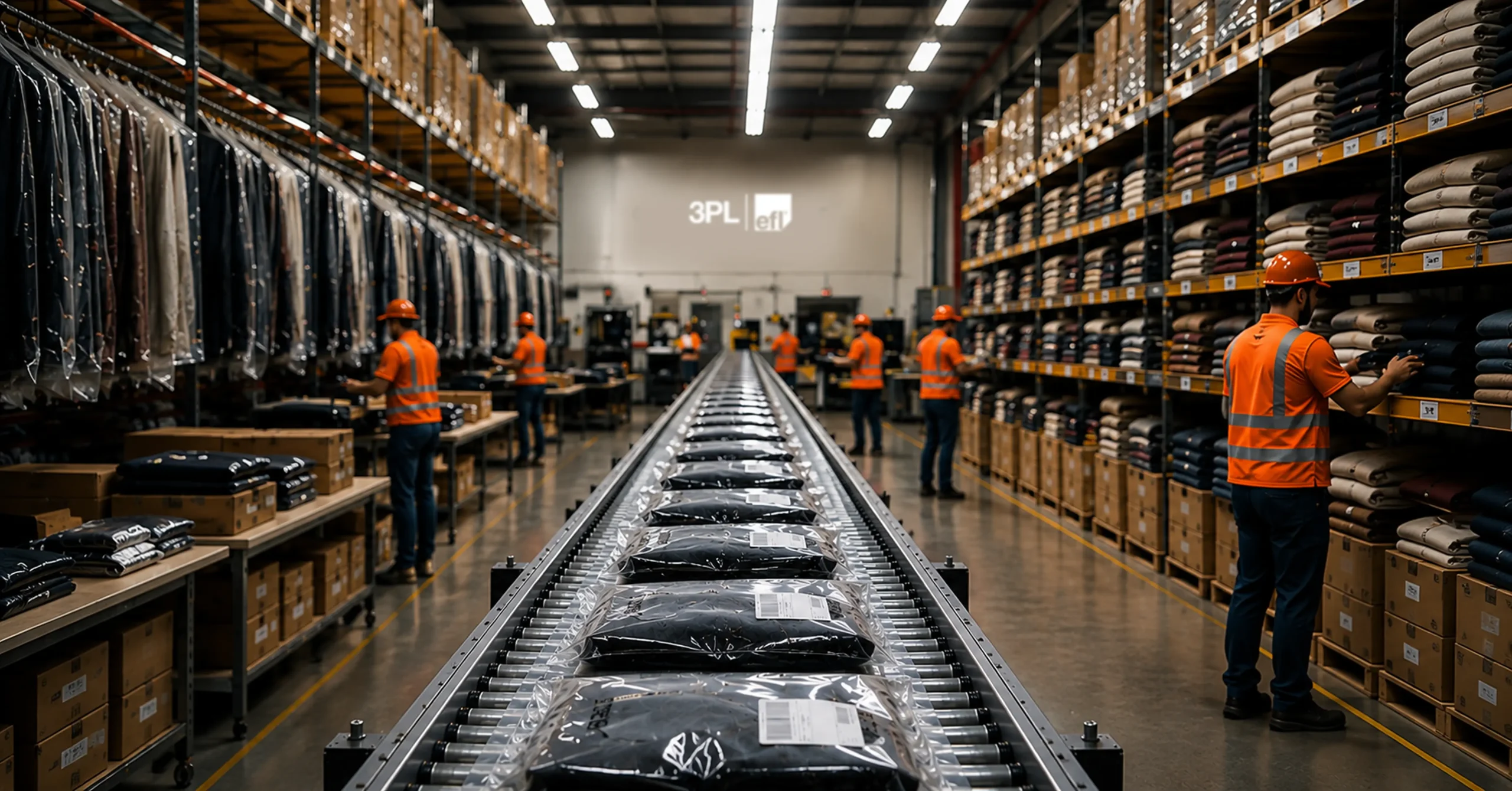
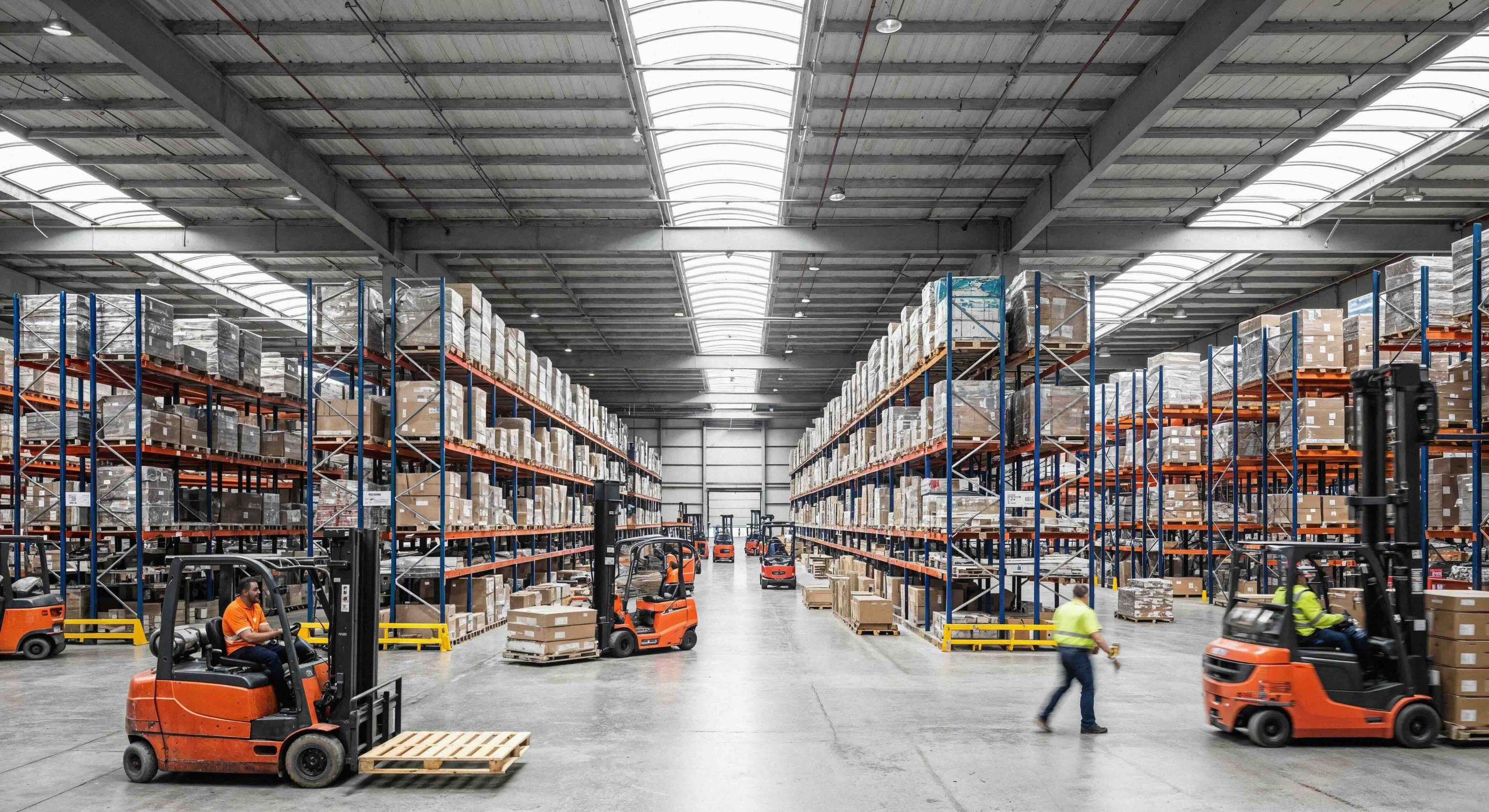
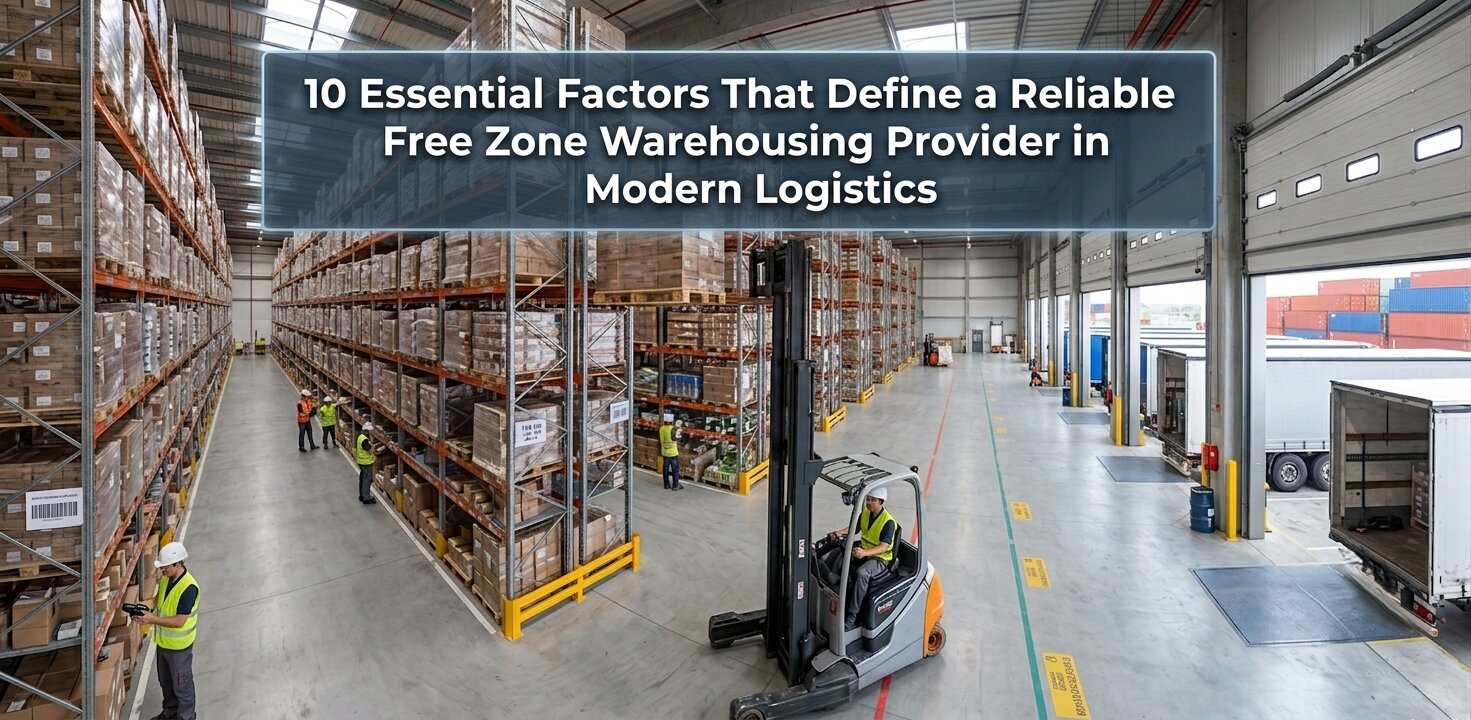
Not every warehouse inside a Free Zone is built to the same standard. Reliable providers invest in racking systems that maximise vertical storage, climate-controlled zones for sensitive goods, dedicated areas for high-value cargo, and loading bays designed for efficient container handling. If your products include pharmaceuticals, electronics, or apparel, confirm that the facility can meet the specific storage conditions those categories demand before signing anything.
5. Technology and Real-Time Inventory Visibility
Modern Free Zone warehousing runs on data. A capable provider operates a warehouse management system (WMS) that gives you real-time visibility of stock levels, movement history and order status, accessible from anywhere anytime. Barcode or RFID scanning, automated stock reconciliation, and integration with your own ERP, WMS or e-commerce platform should be standard, not optional extras. If a provider still manages bonded inventory on spreadsheets, treat that as a warning sign.
6. Robust Security and Cargo Protection
Goods stored under customs bond carry both commercial and regulatory risk, so security cannot be an afterthought. Evaluate the provider’s physical measures—24/7 CCTV coverage, controlled access points, perimeter fencing, and trained security personnel—alongside procedural safeguards like cargo insurance, incident reporting, and cycle counting. The best Free Zone warehousing providers can walk you through exactly what happens if a discrepancy is discovered, because they have a documented process for it.
7. Value-Added Services Under One Roof
One of the biggest advantages of a Free Zone warehouse is the ability to perform work on goods before they enter a market. Labelling, kitting, repacking, quality inspection, light assembly, and country-specific compliance marking can all be completed inside the zone without triggering duty payments. A provider offering these value-added services under one roof removes the need to move cargo between multiple vendors saving time, handling costs, and risk.
8. Scalability and Flexible Storage Models
Inventory volumes rarely stay flat. Seasonal peaks, promotional campaigns, and new market launches all create sudden demand for space. A dependable Free Zone warehousing provider offers flexible storage arrangements shared or dedicated space, short-term or long-term contracts and has the capacity to scale up when your business grows. Ask how the provider handled its clients’ peak seasons last year. The answer will tell you a great deal.
9. Cost Efficiency and Duty Deferment Know-How
The financial case for Free Zone warehousing rests on duty deferment: paying customs duties only when goods leave the zone for the local market or avoiding them entirely on re-exports. A knowledgeable provider helps you structure inventory flows to maximize this advantage—advising on which SKUs to hold in bond, how to sequence releases, and where consolidation can reduce freight spend. This is where an experienced partner pays for itself many times over.
10. Proven Track Record and Industry Experience
Finally, nothing substitutes for experience. A provider that has managed Free Zone operations across industries: fashion, healthcare, FMCG, technology has already encountered the challenges your cargo will face and built processes to handle them. Ask for client references, look at how long the provider has operated within the zone, and pay attention to staff tenure. Long-serving teams are usually a sign of an operation that runs well.
Choosing the Right Free Zone Warehousing Partner
Each of these ten factors matters on its own, but the real test is how they come together. A strategically located warehouse means little without customs expertise; advanced technology means little without the infrastructure and people behind it. The most reliable Free Zone warehousing providers deliver all ten consistently—and can prove it.
At EFL 3PL, our Freeport and bonded warehousing operations combine strategic port connectivity, dedicated customs expertise, WMS-driven inventory visibility, and a full suite of value-added services within our Free Zone facilities. Backed by decades of experience across fashion, healthcare, FMCG, and technology logistics, we help businesses turn Free Zone advantages into measurable supply chain performance.