1 September 2026 | 15 Minutes
Top 15 3PL Companies in India for Reliable Third-Party Logistics Services
Fashion moves quickly. Warehouses usually do not, and that gap creates many of the operational problems fashion businesses face today. A raw material trending this month may become dead stock a few months later, sizes sell unevenly, and even one missing SKU can delay hundreds of festive orders. Behind most of these issues is not design or marketing but warehouse operations. That is why apparel warehousing has become far more specialised than general storage. Modern fashion businesses need systems that can store, handle, and distribute clothing efficiently while managing constant inventory movement across retail and e-commerce channels. For many brands, apparel warehousing now functions as the backbone of the entire fashion supply chain.
Apparel warehousing refers to the specialised storage and management of clothing, footwear, accessories, fashion inventory, and raw materials within a structured warehouse environment. This includes the precise tracking and climate-controlled protection of fabric rolls, trims, buttons, and threads before they enter production. Unlike general warehouses that handle uniform cartons or industrial goods, an apparel warehouse manages thousands of variations across size, colour, style, fit, and season, often with dozens of SKU combinations for a single product. Beyond storage, apparel warehousing also supports apparel fulfillment, inventory tracking, clothing distribution, quality control, and order dispatch across retail and e-commerce channels, making warehouse inventory management closely tied to customer experience for growing fashion brands.
Fashion inventory behaves very differently from most other product categories. Garments wrinkle, fabrics react to humidity, and styles can become outdated far quicker than expected. Inventory movement also changes constantly with trends, weather shifts, festive demand, and even social media influence. Because of this, a garment warehouse requires more flexible storage systems, faster picking workflows, accurate scanning processes, and stronger returns management than traditional warehouses. While general warehousing focuses mainly on storage efficiency, apparel warehousing depends just as much on speed, presentation, inventory visibility, and fulfilment accuracy.
Apparel warehousing isn’t only about finished goods sitting on shelves before they reach a customer. A large part of it happens much earlier, when fabric rolls, trims, buttons, zippers, and other raw materials are stored and staged before they even reach a factory floor.
Brands and manufacturers often rely on a warehouse to hold this raw material inventory, track it accurately, and release it to production exactly when needed. Getting this stage wrong can delay an entire production run, even if the finished goods side of the warehouse is running perfectly.
This part of apparel warehousing usually involves:
Once garments are manufactured, the same warehouse network often takes the finished goods back in, completing the loop from raw material to shelf-ready inventory. For contract logistics providers, being able to manage both ends, raw material staging and finished goods fulfilment, is what actually makes the supply chain work end to end.
Most customers never think about warehouses directly. They notice whether the right size arrived on time, whether the packaging felt clean, or whether a return was processed smoothly. That is where apparel fulfillment services quietly shape brand perception. Picking errors, delayed dispatches, missing inventory, or damaged garments usually appear to customers as poor service, even when the problem started inside warehouse operations. Accurate apparel warehousing helps businesses improve order processing, reduce fulfilment mistakes, and maintain faster shipping timelines during both regular sales periods and seasonal spikes.
Poor warehousing becomes expensive very quickly. Inventory losses increase, teams spend hours locating stock manually, and delivery timelines stretch longer than promised. Fashion brands scaling online often realise that warehouse inefficiencies become operational bottlenecks long before marketing or sales slows down. Well-structured apparel warehousing helps businesses manage growing inventory volumes more efficiently without constantly rebuilding operational systems during expansion periods.
Few industries deal with SKU complexity the way fashion does. One design may exist across six sizes, four colours, multiple fits, and seasonal variations, creating dozens of inventory combinations for a single product line. Because of this, warehouse garment management relies heavily on accurate inventory mapping, barcode systems, and real-time tracking to prevent picking errors and stock mismatches. The challenge becomes even greater for businesses managing omnichannel inventory across marketplaces, retail stores, and direct-to-consumer operations at the same time.
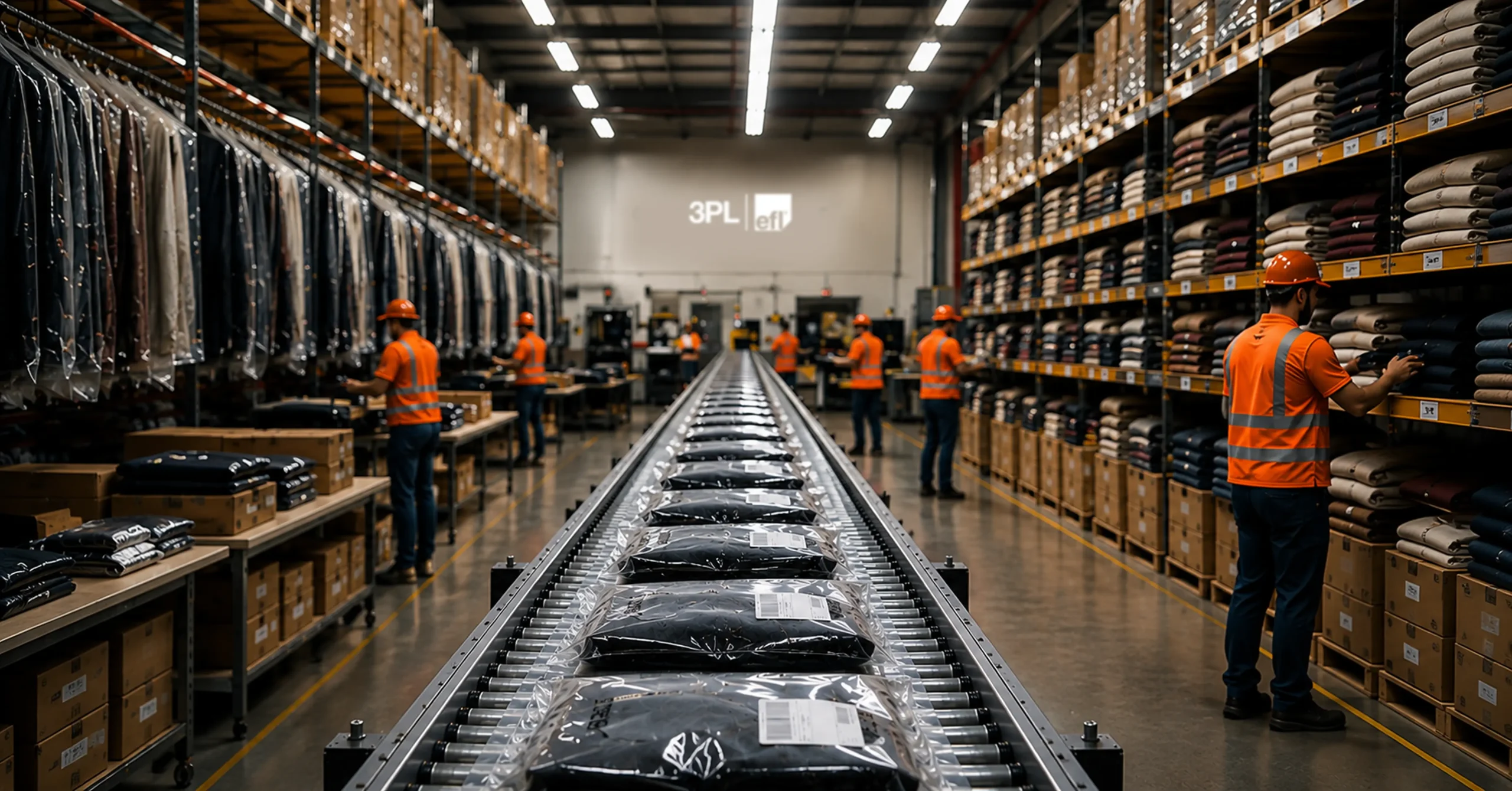
Garments also require careful physical handling because different fabrics respond differently to storage conditions. Some crease easily, some absorb moisture, and luxury apparel often needs hanging systems instead of folded storage to maintain shape and presentation. Delicate garments may also require protective packaging before shipping to prevent damage during transit. That is why apparel fulfillment centres usually rely on lightweight shelving, hanging racks, climate monitoring systems, and flat-pack storage designed specifically for clothing inventory.
Most apparel warehouses combine multiple storage formats within the same facility to handle different types of inventory efficiently. Fast-moving products are usually placed closer to packing stations for quicker dispatch, while hanging garments use rack systems and folded inventory is stored through shelving or bin storage. Bulk stock is often moved into pallet storage deeper inside the warehouse. Efficient clothing distribution depends heavily on how intelligently inventory is organised physically, especially when businesses manage large SKU volumes and fast order movement.
Temperature and humidity affect apparel far more than many businesses initially expect. Excess moisture can damage packaging, affect fabric quality, create odours, and increase long-term storage risks. Because of this, climate control systems become especially important for premium apparel, luxury products, delicate fabrics, and inventory that remains in storage for longer periods.
Modern apparel warehousing increasingly depends on automation to manage large inventory volumes and faster order movement. Barcode scanning, automated sorting systems, conveyor movement, and RFID tracking help warehouses reduce manual errors while improving inventory visibility and fulfilment accuracy. Many apparel fulfillment services now rely on automated sorting, transport systems, and optimised workflows to handle high-volume order environments more efficiently.
A warehouse management system acts as the operational brain of a warehouse, helping teams track inventory movement, picking accuracy, receiving processes, returns management, and dispatch coordination in real time. For fashion businesses handling large SKU volumes across multiple sales channels, this visibility becomes essential for maintaining fulfilment accuracy and inventory control. Platforms such as the Uphance apparel warehouse management system and ERP-based inventory tools help businesses manage inventory more efficiently across warehouses, marketplaces, retail stores, and e-commerce operations simultaneously.
Apparel orders often involve multiple SKUs within the same shipment, especially across sizes, colours, and product variations. Fast picking workflows help reduce unnecessary movement inside the warehouse, improve fulfilment accuracy, and speed up dispatch timelines. Packing stations are usually positioned strategically to support quicker processing during high-volume periods, which becomes especially important for apparel fulfillment operations handling flash sales, festive demand, or seasonal campaigns.
Cross-docking helps warehouses reduce long-term storage by moving incoming inventory directly towards outbound dispatch areas instead of storing it for extended periods. This improves inventory turnover, reduces storage congestion, and allows faster product movement across the supply chain, particularly for fast-moving apparel inventory.
Fashion inventory changes constantly with seasonality, trends, launches, and sales cycles. Because of this, warehouse layouts need flexibility rather than fixed storage structures. Adjustable shelving, modular racks, and movable storage zones help businesses reorganise inventory more efficiently according to changing sales patterns and inventory movement.
Modern apparel warehousing often extends beyond basic storage and dispatch operations. Many warehouses now support value-added services directly within fulfilment workflows to help brands manage packaging, presentation, marketplace requirements, and customer experience more efficiently across retail and e-commerce operations.
Value-added services within apparel warehousing may include:
For many clothing fulfillment companies, these operational details now directly shape customer experience, especially for e-commerce and premium fashion brands.
Fashion inventory becomes risky very quickly when forecasting fails. Understocking leads to missed sales opportunities, while overstocking creates dead inventory that often ends up heavily discounted later. Because of this, strong apparel warehousing operations rely on forecasting systems that analyse:
Accurate demand planning helps warehouses maintain inventory balance without slowing fulfilment operations.
Fashion trends move unpredictably. A product may suddenly spike because of influencer visibility, viral content, or seasonal demand, then slow down just as quickly a few weeks later. Warehouses therefore need flexible inventory planning systems that can respond quickly without disrupting fulfilment workflows. That balance between inventory availability and inventory risk sits at the centre of warehouse inventory management for clothing and apparel Shopify stores.
Warehouse layouts should minimise unnecessary movement between receiving, storage, picking, packing, and dispatch zones. Faster and more organised layouts help improve labour efficiency, reduce processing delays, and support quicker fulfilment timelines across daily warehouse operations, especially during high-volume order periods.
Fashion businesses rarely operate at stable volumes throughout the year. Festive periods, launch drops, end-of-season sales, and promotional campaigns can multiply order volumes within days. Warehouses therefore need flexibility through:
Without that flexibility, operational bottlenecks tend to appear very quickly during peak demand periods.
Climate management plays an important role in protecting apparel quality during long-term storage and transportation transitions. This becomes especially important for delicate fabrics, premium garments, moisture-sensitive materials, and inventory stored for extended periods, where humidity and temperature fluctuations can affect fabric condition, packaging quality, and overall product presentation.
Efficient storage layouts help reduce congestion while improving inventory accessibility across the warehouse. Well-designed garment warehouse operations maximise vertical storage, organise inventory more intelligently, and improve movement efficiency without slowing down picking workflows.
Real-time barcode scanning and RFID tracking help warehouses reduce inventory mismatches, improve stock visibility, and maintain stronger fulfilment accuracy. Precise tracking systems also improve accountability across receiving, storage, picking, and dispatch workflows.
Automation helps reduce repetitive manual work while improving fulfilment consistency and operational speed. Many smart warehousing, inventory, and communication strategies now integrate:
These systems help warehouses manage large order volumes more efficiently while reducing operational delays.
AI systems are increasingly being used within apparel warehousing to forecast inventory movement, staffing requirements, replenishment timing, and demand fluctuations. Predictive analytics also helps businesses plan inventory more accurately during uncertain sales cycles and changing fashion trends.
Robotic process automation helps reduce manual data entry, repetitive scanning tasks, and operational delays within warehouse systems. This becomes especially valuable for large-scale apparel fulfillment center operations managing high SKU volumes and fast-moving inventory.
Centralised dashboards provide real-time visibility across:
This helps businesses evaluate warehousing options more clearly while making faster and more informed operational decisions.
Fashion warehouses often manage thousands of SKU combinations at the same time across sizes, colours, styles, and seasonal collections. To reduce inventory confusion and fulfilment errors, warehouses increasingly rely on:
These systems help maintain stronger inventory accuracy across high-volume operations.
Seasonal demand fluctuations create sudden operational pressure for fashion businesses. Festive campaigns, sale periods, and product launches can increase order volumes rapidly, which is why warehouses need:
This flexibility helps warehouses absorb demand spikes more efficiently without slowing operations.
Fashion inventory moves quickly, especially within trend-driven product categories where demand can shift within weeks or even days. Warehouses therefore need streamlined workflows that minimise unnecessary handling, reduce dispatch delays, and support faster inventory movement across fulfilment operations without affecting order accuracy.
Specialised apparel warehousing improves inventory visibility, barcode accuracy, and picking efficiency across high-SKU operations. Organised storage systems and real-time inventory tracking help reduce fulfilment mistakes, prevent stock mismatches, and maintain more accurate order processing across retail and e-commerce channels.
Strategically organised apparel warehouses help businesses reduce dispatch delays and improve delivery timelines across both retail and e-commerce channels. Faster picking workflows, accurate inventory placement, and efficient order processing allow products to move through fulfilment systems more quickly, especially during high-demand sales periods.
Fashion-focused storage systems help maximise usable warehouse space while still supporting quick inventory access and smoother operational movement. Efficient layouts also reduce congestion inside the warehouse and improve overall storage organisation across high-volume apparel inventory.
Structured garment handling processes help reduce:
Better inventory systems, organised workflows, climate controls, and tracking processes help reduce operational disruptions across apparel supply chains. These systems also minimise fulfilment errors, inventory mismatches, product damage, and delays that can affect customer experience and overall warehouse efficiency.
Garments should be handled carefully throughout storage, picking, packing, and fulfilment to prevent:
Proper handling practices become especially important for delicate fabrics, luxury apparel, and premium fashion products.
Warehouses reduce inventory damage through:
These operational practices help maintain apparel quality during storage and dispatch.
Routine inspections and quality checks help warehouses maintain operational consistency, inventory accuracy, and fulfilment reliability over time. Regular audits also help identify storage issues, inventory mismatches, and handling errors before they begin affecting customer orders or overall warehouse performance.
Compliance is usually one of the first things a company checks before choosing a contract logistics partner, and for good reason. It’s not just about warehouse audits; it also covers how inventory is sourced, handled, and moved through the supply chain.
For brands with sustainability commitments, this can include organic certifications. If a brand’s finished goods need to move through an organic supply chain, from raw material storage right through to dispatch, the warehouse handling that inventory needs to hold the relevant certifications too. This lets brands confidently tell their customers that their products have been handled through a certified organic supply chain end-to-end.
Beyond certifications, compliance in apparel warehousing typically covers:
Warehouses that can demonstrate compliance across all these areas tend to be easier for brands to trust with growing volumes, especially when private label or premium fashion lines are involved.
Experienced apparel 3PL companies usually operate with clearer workflows, stronger accountability systems, and more specialised fulfilment expertise. This helps businesses manage inventory operations more efficiently as order volumes grow while maintaining better accuracy, visibility, and operational control across fulfilment processes.
Reliable apparel warehousing and fulfillment services help reduce operational friction across:
This creates smoother day-to-day warehouse operations across retail and e-commerce channels.
Modern warehouse systems increasingly provide real-time inventory visibility, order tracking, and operational support throughout fulfilment cycles. This allows businesses to respond faster to inventory gaps, dispatch delays, and order-related issues while maintaining better visibility across day-to-day warehouse operations.
Warehouse analytics help businesses improve forecasting, staffing, inventory planning, fulfilment efficiency, and overall operational decision-making over time. Real-time operational data also helps warehouses identify delays, inventory gaps, and workflow inefficiencies more quickly, allowing teams to respond faster and manage operations more accurately.
Fashion businesses move quickly, and warehouses need to keep pace without losing operational control. That does not only mean larger facilities or more automation. It means building apparel warehousing systems capable of handling SKU complexity, rapid inventory turnover, seasonal demand shifts, and growing customer expectations while still maintaining fulfilment accuracy and inventory visibility.
The best warehouse operations usually feel almost invisible from the customer side. Orders arrive correctly, returns move smoothly, inventory stays accurate, and delivery timelines remain consistent even during high-demand periods. In many ways, that is the real measure of efficient apparel warehousing. When customers never have to think about the warehouse at all, it is probably doing its job properly.
An apparel warehouse is a facility used to store, manage, and distribute clothing, footwear, and fashion inventory.
The main types include private warehouses, public warehouses, bonded warehouses, distribution centres, fulfilment centres, smart warehouses, and climate-controlled warehouses.
The 3-3-3 rule is a wardrobe styling method that creates multiple outfits using a limited number of clothing pieces.
The 7 point system is a fabric inspection method used to identify and grade fabric defects before production.
Apparel warehousing usually supports fashion, footwear, accessories, retail, and e-commerce businesses.
Most apparel warehouses primarily store garments, textiles, and fashion accessories rather than hazardous materials.
Warehouses follow pest control and sanitation practices to protect stored inventory and maintain operational hygiene.
Most modern warehouse systems allow automatic order routing through integrated e-commerce and ERP platforms.
Damaged pallet claims are typically managed through inspection reports, documentation, and warehouse or transport insurance processes.