1 September 2026 | 15 Minutes
Top 15 3PL Companies in India for Reliable Third-Party Logistics Services
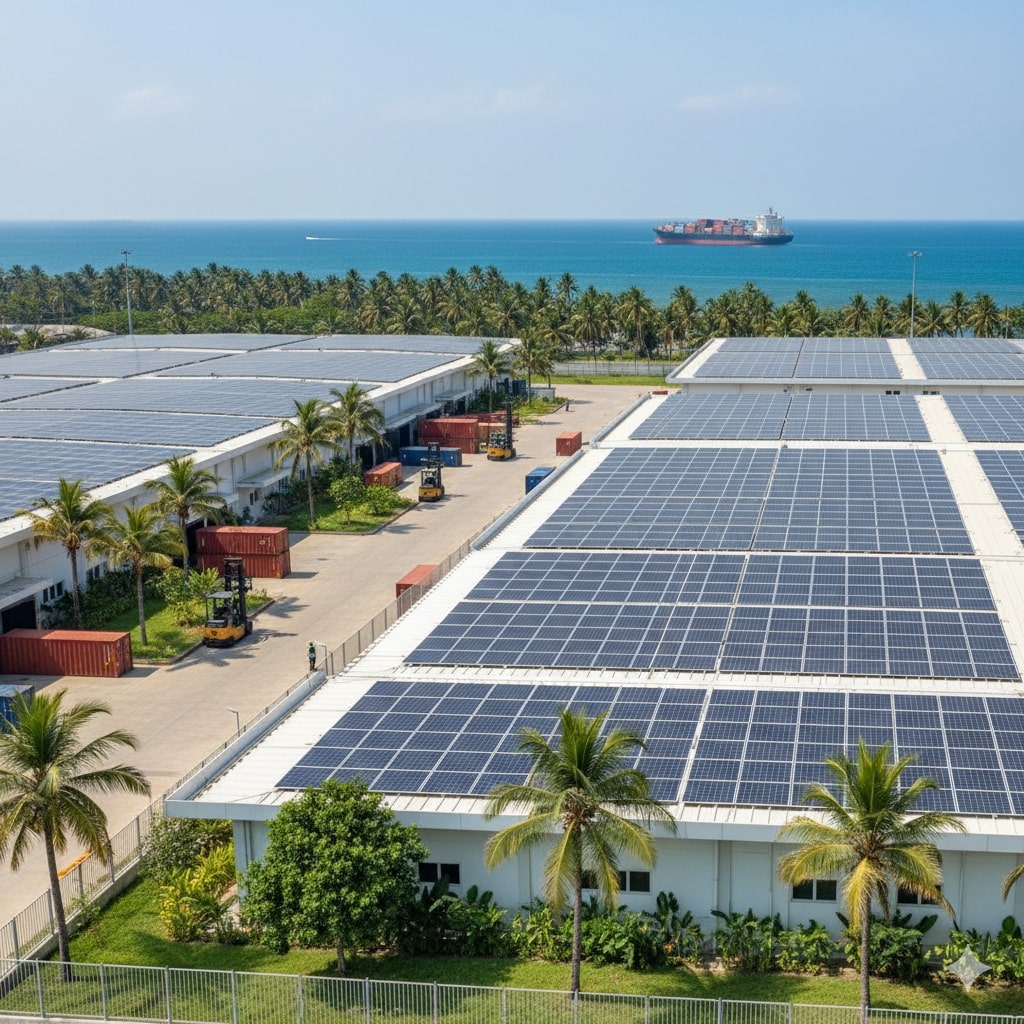
As global trade expands and the outcry for greater environmental awareness increases, sustainable logistics are not an option but an imperative. Sri Lankan freeports, strategically positioned in the Indian Ocean, can take the lead in demonstrating environmentally friendly supply chain operations. Companies operating in the Sri Lankan Freezones, together with leading partners offering top tier freeport warehousing services like EFL 3PL, create the ideal ecosystem for delivering both efficiency and sustainability.
Freeports are international trading hubs designed to streamline cross-border operations through green channel operations and advanced infrastructure. However, the rapid pace of shipment movements can also create significant environmental challenges, including higher energy consumption, increased waste generation, and elevated carbon emissions.
By adopting green practices, the Freeport warehousing companies in Sri Lanka are turning these bustling trade zones into models of sustainability. Renewable energy, efficient storage systems, waste management protocols, and eco-friendly packaging are just some of the initiatives of reshaping logistics.
The Freezone warehouses in Sri Lanka are built to handle high cargo volumes while minimizing the environmental impact. Facilities make use of,
In addition to regulatory requirements, Freeport warehousing companies conform to these practices in order to increase their global competitiveness by aligning themselves with eco-conscious brands and partners.
EFL 3PL actively contributes to making sustainable logistics in Sri Lanka’s freeports possible. Services include,
Breaking industry conventions with smart solutions, in 2013, EFL 3PL launched EFL Global Freeport, becoming the first private company to establish a commercial freeport in Sri Lanka, specifically in Katunayake. The mission was crystal clear to support the government’s vision of positioning Sri Lanka as a thriving global logistics hub in the region.
The freeport, acting as the key transshipment hub, operates cost-effectively and efficiently through a highly experienced team to handle complex requirements of the supply chain. EFL 3PL’s services include but are not limited to, Entreport services, multi country consolidation, offshoring services, and BOI approved Logistics Services.
The SCAN-certified warehouse ensures superior protection, while these effective solutions maintain agility and sustainability across operations.
Sri Lanka is uniquely positioned to become a model of sustainable logistics in the Indian Ocean region through its freeports. Operational excellence, combined with environmental responsibility, can be achieved by using Freezone warehouses in Sri Lanka in cooperation with leading Freeport warehousing companies and with the expertise of EFL 3PL. With projects like EFL Global Freeport, Sri Lanka is proving that efficiency, profitability, and sustainability can go hand in hand, setting a new benchmark for green logistics in the region.