23 March 2026 | 6-MIN Read
FTZ vs. Bonded Warehouse: Which One Does Your Brand Need?
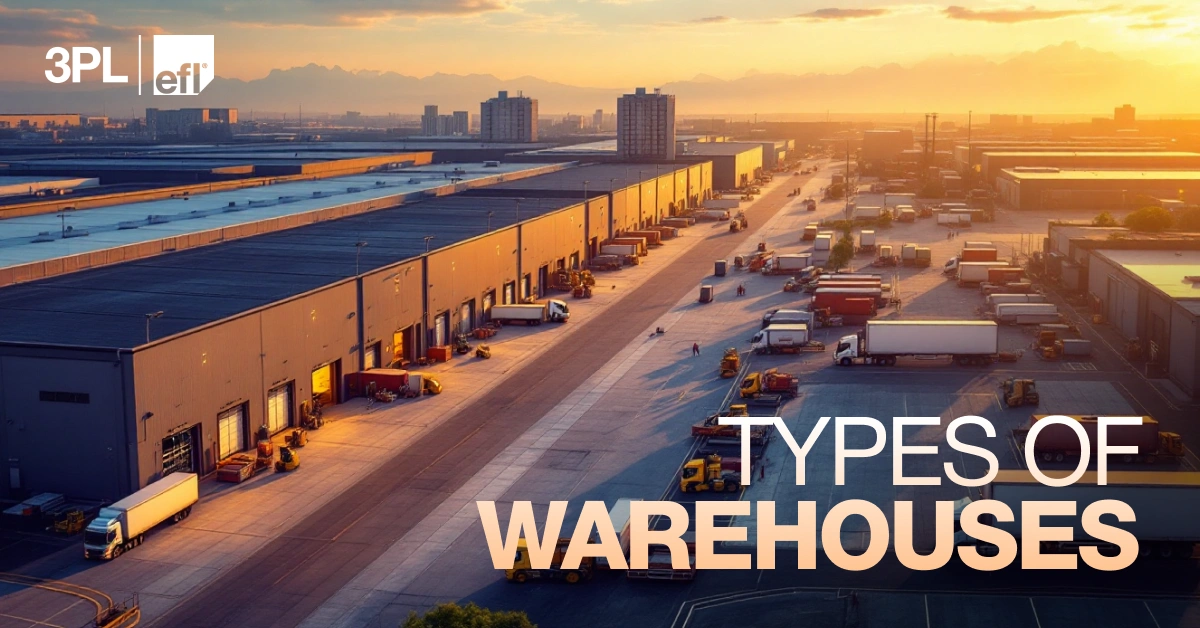
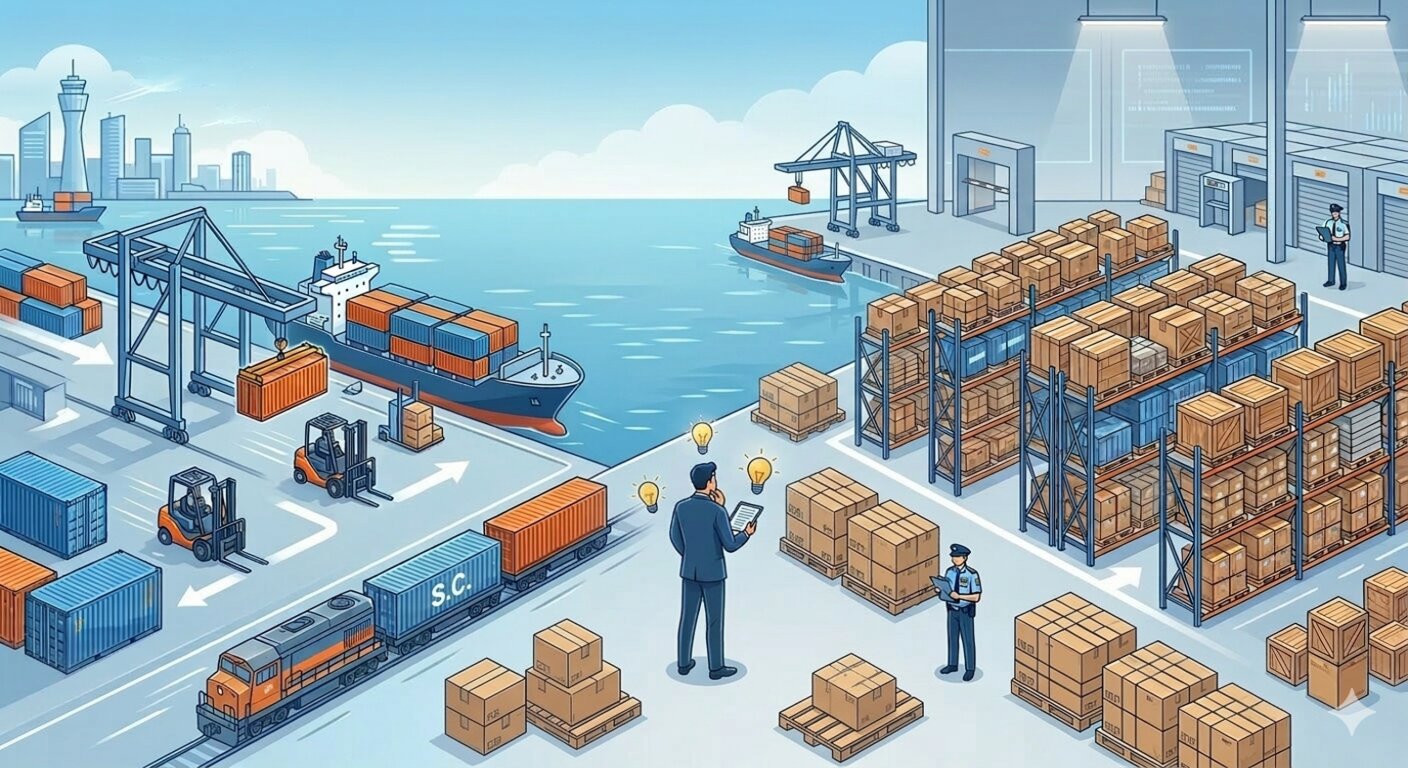
Warehousing sits quietly at the heart of supply chains. Goods may be produced in one location, consumed in another, and transported across multiple networks in between, but it is the warehouse that holds everything together. As supply chains become faster, more fragmented, and more customer-driven, understanding different types of warehouses has become essential for logistics planning in 2026.
Warehouses today are not interchangeable boxes. Each type serves a specific purpose depending on ownership, function, storage conditions, and technology. Choosing the wrong one can increase costs and slow operations. Choosing the right one can quietly improve efficiency across the entire supply chain.
This guide explains the different types of warehouses, how they are classified, and how businesses can select the right model for their logistics strategy.
Warehousing refers to the organized storage, handling, and management of goods until they are required for sale, distribution, or further processing. It bridges the gap between production and consumption by ensuring goods are available at the right place and time.
Modern warehousing goes beyond storage. It includes inventory control, order preparation, value-added services, and coordination with transport networks. In logistics and supply chain operations, warehouses act as control points where goods are counted, protected, and prepared for movement.
As businesses scale and distribution networks expand, warehousing becomes a strategic decision rather than a purely operational one. In practical logistics networks, warehousing works closely with freight forwarding & clearance to ensure smooth movement of goods from ports into domestic storage and distribution.
Warehouses are not uniform facilities. Their design, operation, and purpose vary depending on how they are owned, what role they play in the supply chain, the nature of goods stored, and the level of technology involved. Understanding these classifications helps businesses select warehousing models that align with operational needs rather than relying on generic storage solutions.
Broadly, warehouses can be classified based on ownership, function, storage requirements, and technological advancement. Each classification influences cost, control, flexibility, and scalability in different ways.
Ownership determines who controls the warehouse, how access is managed, and how resources are allocated.
Warehouses owned and operated by a single organization are typically used to support predictable volumes and long-term operations. These facilities allow full control over layout, processes, security, and staffing. However, they also involve higher capital investment and fixed operating costs.
On the other hand, shared or third-party warehouses are used by multiple clients. These facilities offer flexibility, lower upfront investment, and the ability to scale storage space based on demand. Ownership structure directly affects cost models, contractual commitments, and the level of operational control a business retains.
Choosing the right ownership model depends on volume stability, growth plans, and the need for flexibility versus control.
Functional classification focuses on the role a warehouse plays within the supply chain.
Some warehouses are designed primarily for long-term storage, where goods may remain for extended periods before distribution. Others are structured for rapid movement, acting as consolidation, sorting, or fulfillment hubs rather than storage locations.
For example, warehouses that support order fulfillment prioritize picking speed, accuracy, and workflow efficiency. Distribution-focused warehouses emphasize quick turnaround and dispatch readiness. Functional alignment ensures that warehousing supports broader business objectives such as faster delivery, lower inventory holding, or improved service levels.
Understanding function helps businesses avoid mismatches between warehouse design and operational requirements.
Different goods demand different storage conditions.
Perishable items such as food and pharmaceuticals require temperature-controlled environments. Hazardous materials need specialized handling, segregation, and compliance protocols. High-value goods often require enhanced security measures, while bulky or irregular items need specific layout planning.
This classification ensures that goods are preserved in the right conditions, reducing spoilage, damage, and regulatory risk. Selecting warehouses based on storage requirements is critical to maintaining product quality and meeting safety standards across the supply chain.
Technology has reshaped warehousing over the past decade. Modern warehouses increasingly rely on warehouse management systems, automation, robotics, and data analytics to improve speed and accuracy. These facilities are designed to handle high-order volumes, complex SKU profiles, and tight delivery timelines.
Automated and technology-enabled warehouses reduce manual dependency, improve inventory visibility, and support scalable operations. As supply chains become more customer-driven and time-sensitive, this classification has gained importance, particularly for e-commerce and omnichannel distribution.
Technology-led warehousing models support efficiency, consistency, and long-term scalability in complex supply chain environments.
Understanding the different types of warehouses helps businesses design logistics networks that are fit for purpose rather than convenient by default.
A public warehouse is operated by a third party and offers storage space to multiple businesses on a rental basis. It is commonly used by small and mid-sized companies that do not want to invest in owned infrastructure.
Public warehouses offer flexibility. Businesses can scale storage up or down based on demand. Costs are usually variable rather than fixed, which helps manage cash flow.
These warehouses typically provide basic services such as storage, handling, and dispatch, with optional add-ons depending on the operator.
A private warehouse is owned or leased by a single organization and used exclusively for its goods.
This type of warehouse offers maximum control over layout, processes, and security. It is often used by large manufacturers, retailers, or distributors with predictable volumes and long-term storage needs.
While private warehouses require higher upfront investment, they provide consistency and can be tailored closely to operational requirements.
Bonded warehouses are authorized by customs authorities to store imported goods before duties and taxes are paid.
They are commonly used in international trade. Goods can be stored under customs control until they are cleared for domestic use or re-exported.
Bonded warehouses help businesses manage cash flow by deferring duty payments and provide flexibility in cross-border supply chains.
A distribution centre focuses on movement rather than storage. Goods arrive, are sorted, consolidated, and dispatched quickly to retailers, wholesalers, or customers. Storage duration is typically short.
Distribution centres are designed for speed and accuracy. They support high-frequency dispatch and are often located close to consumption hubs, where distribution center management plays a critical role in modern retail and e-commerce logistics.
This warehouse type is central to modern retail and e-commerce logistics.
Cold storage warehouses maintain controlled temperature environments for perishable or sensitive goods.
They are used for food, pharmaceuticals, chemicals, and certain agricultural products. Temperature control helps preserve quality and extend shelf life.
Cold storage requires specialized infrastructure, monitoring systems, and handling protocols. Errors in these environments can lead to significant losses.
Cross-dock warehouses minimize storage time. Goods are received and transferred directly from inbound to outbound vehicles, often within hours. There is little or no long-term storage.
This model reduces inventory holding costs and speeds up delivery. It is commonly used in fast-moving supply chains where timing is critical.
Smart or automated warehouses use technology to reduce manual intervention.
Automation may include conveyor systems, robotics, automated storage and retrieval systems, and advanced warehouse management software.
These warehouses are designed for high-volume operations where speed, accuracy, and data visibility are priorities. They support complex order profiles and tight delivery windows.
Selecting from the different types of warehouses requires more than comparing square footage or rental rates. The decision should align with how the business operates and plans to grow.
Perishable goods require temperature-controlled storage, while durable goods offer more flexibility.
Short-term storage favours distribution centres or cross-dock models. Long-term storage may justify private or public warehouses.
Fixed costs suit predictable volumes. Variable costs suit fluctuating demand.
High order volumes or SKU complexity may require automated or system-driven warehouses.
Fast delivery models benefit from warehouses located near demand centres with quick dispatch capability.
Warehousing is evolving in response to faster delivery expectations, rising order volumes, and more complex supply chains. The focus is shifting from storage capacity to speed, visibility, and operational flexibility. These changes are influencing how the different types of warehouses are designed and used in 2026.
Automation is being adopted to support repetitive and high-volume tasks such as sorting, storage, and picking. Tools like conveyor systems and automated storage help improve accuracy and reduce dependence on manual handling, especially in large or fast-moving operations.
Warehouses now rely on operational data to manage inventory levels, optimize layouts, and plan labour more effectively. Analytics helps identify inefficiencies and supports quicker decision-making as demand patterns change.
Smaller warehouses located closer to cities are being used to reduce last-mile delivery time. These centres prioritize quick picking and dispatch rather than long-term storage and are especially relevant for eCommerce-led supply chains.
Warehouse operations are increasingly coordinated with transport schedules and routing. This integration improves vehicle utilization, reduces delays, and supports more reliable deliveries.
Energy-efficient lighting, better space utilization, and waste reduction practices are becoming more common. These measures help control costs while supporting long-term sustainability goals.
Public warehouses, private warehouses, bonded warehouses, distribution centres, cold storage warehouses, cross-dock warehouses, and automated warehouses are among the various types of warehouses used in logistics.
Public, private, bonded, and distribution-focused warehouses are often considered the four major categories.
Public warehouses are widely used due to their flexibility and lower upfront cost.
The 7s typically refer to space, systems, safety, staff, stock, speed, and service.
Procurement, transportation, warehousing, and distribution form the core logistics functions.
Public warehouses are commonly used by businesses with variable storage needs.
Warehousing ensures availability, stability, and coordination across supply chains by managing inventory between production and consumption.
While not mandatory for every operation, a warehouse management system improves accuracy, visibility, and scalability, especially as volume increases.