1 September 2026 | 15 Minutes
Top 15 3PL Companies in India for Reliable Third-Party Logistics Services
Warehousing in India has evolved into a core business function rather than a backend utility. As distribution becomes faster, inventory cycles shorten, and customer expectations tighten, businesses are paying closer attention to how warehouses are run, not just where they are located.
This blog presents an updated list of warehousing companies in India that offer organised, scalable warehousing and fulfilment capabilities in 2026. The focus is on companies that operate within structured logistics and warehousing models, particularly those relevant to eCommerce, retail, and distribution-heavy businesses.
EFL 3PL operates as a third-party logistics and warehousing service provider in India, with warehousing positioned as a core operational layer rather than a standalone storage function. The company publicly lists warehousing, eCommerce fulfilment, value-added services, and distribution support as part of its India operations. Its model is designed for businesses that require organised inventory handling, predictable fulfilment, and scalable distribution across regions.
Mahindra Logistics operates as an integrated logistics and supply chain services provider with a strong presence in contract warehousing. Its warehousing services are typically delivered as part of larger enterprise and industrial supply chain engagements rather than standalone storage.
Warehouse Now functions as a warehousing and fulfilment platform that connects businesses with available warehouse infrastructure across cities. It is commonly used by companies looking for warehouse space in India without committing to long-term leases upfront.
Shiprocket Fulfillment offers warehousing and order processing services primarily for D2C and small-to-mid-sized eCommerce brands. Its warehousing capabilities are tightly integrated with its shipping and technology platform.
Quickshift positions itself around eCommerce fulfilment, combining warehousing with order processing and dispatch coordination. Its services are commonly used by retail and D2C brands seeking faster order movement.
TVS Supply Chain Solutions provides warehousing as part of its end-to-end supply chain services, with strong roots in automotive and industrial logistics.
Prozo operates a tech-enabled warehousing and fulfilment network designed for eCommerce and omnichannel brands. It combines storage, inventory management, and fulfilment under a unified operational layer.
Holisol offers warehousing and fulfilment services with a focus on technology, electronics, and multi-channel distribution models.
Emiza operates fulfilment centres aimed at D2C and B2B brands, offering warehousing as part of an end-to-end order execution setup.
Warehousing Express provides storage and warehouse management services alongside transportation and distribution support.
Apollo LogiSolutions operates warehousing and contract logistics facilities for manufacturing and retail clients.
Allcargo offers warehousing as part of its integrated logistics and supply chain services, particularly for trade-linked operations.
Delhivery operates fulfilment centres and warehouses that support its parcel, freight, and eCommerce networks.
XpressBees provides warehousing as part of its broader eCommerce logistics and last-mile delivery services.
FM Logistics offers contract warehousing services for consumer goods and retail brands, with a focus on organised warehouse operations.
Choose locations based on your order heatmap, not just rental cost. Many warehousing companies in India operate in clusters around major consumption zones and industrial corridors.
While many businesses search for the biggest warehouse in India, size alone should be evaluated alongside layout efficiency, throughput capability, and operational design. For most brands, how well a warehouse handles inventory flow and order volumes matters just as much as total square footage.
Look for controlled entry, CCTV coverage, audit trails, and documented stock handling.
Ask what system is used for inventory and order movement. Most serious warehousing services in India will be supported by a warehouse management process or platform.
Clarify what is included and what is billed separately. Storage, handling, pick-pack, VAS, and returns can be structured differently by different providers.
“Top rated” is useful as a Google filter, but verified with references, SLAs, and service scope.
You want a provider that can scale up during peak season and scale down without breaking operations.
The right choice is the company that matches your operational shape. Not every logistics and warehousing company in India is designed for the same job.
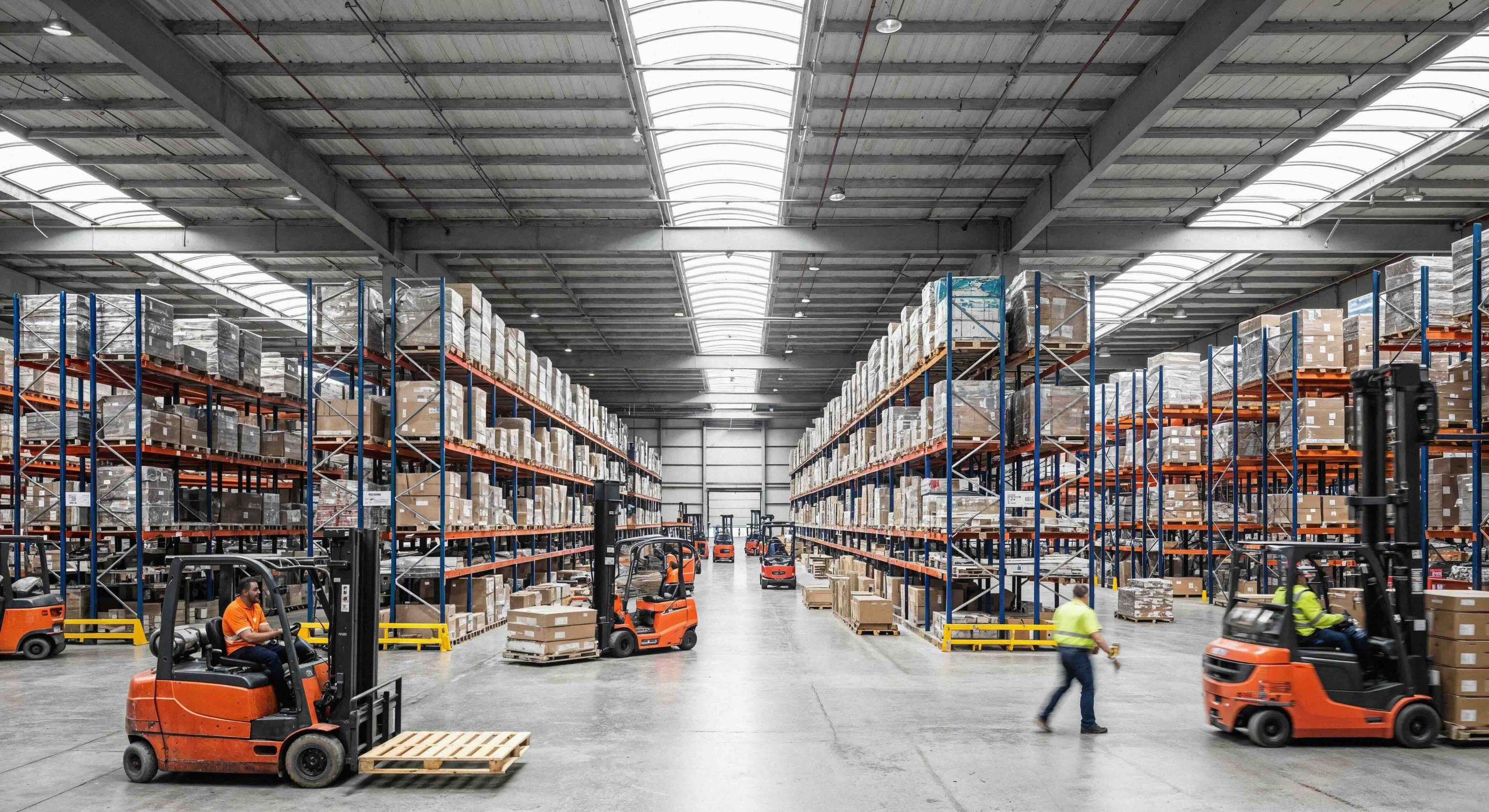
Warehousing and storage form the foundation of all logistics operations. Structured storage involves more than placing goods on shelves. It includes planned inbound receiving, systematic putaway, and continuous inventory control. Goods are assigned specific locations based on SKU characteristics, turnover rate, and handling requirements. This structure helps prevent congestion, reduces handling errors, and ensures that inventory remains traceable at all times. Proper storage also supports preservation by protecting goods from damage, contamination, or environmental exposure, depending on category and sensitivity.
Picking and packing are central to order fulfilment accuracy. Picking involves retrieving the correct items from storage locations based on order instructions, while packing ensures those items are secured, labelled, and prepared for dispatch. This stage directly affects delivery quality and return rates. Well-defined picking paths, verification checks, and packing standards help reduce errors and maintain consistency, especially in high-volume environments such as eCommerce and retail distribution.
Order processing connects inventory to customer demand. It begins with inventory verification to ensure stock availability, followed by SKU validation to confirm product accuracy. Workflow execution includes prioritising orders, allocating stock, and coordinating picking and packing activities. Efficient order processing reduces delays, avoids overselling, and ensures that commitments made to customers are met within defined timelines.
Shipping involves handing over processed orders to transportation networks for onward delivery. This includes dispatch planning, load consolidation, documentation, and coordination with carriers. Effective shipping control ensures that orders leave the warehouse on schedule, are routed correctly, and are traceable throughout transit. This function links warehousing directly with transportation performance and customer delivery expectations.
Returns processing manages goods that move back into the supply chain after delivery. This includes inbound receipt of returned items, quality checks to assess condition, and decisions on restocking, refurbishment, or liquidation. Efficient returns handling helps recover value, reduces waste, and maintains inventory accuracy. It is particularly important in eCommerce, where return volumes can significantly affect operational costs.
Beyond core storage and fulfilment, warehousing providers often support broader supply chain activities. This may include distribution planning, coordination of value-added services such as labelling or kitting, and operational improvements based on observed order and inventory patterns. Supply chain assistance helps businesses align warehousing operations with sales forecasts, transport planning, and growth strategies, creating a more cohesive logistics flow.
This is why warehouses in India are increasingly run like operational plants, not storage rooms.
A 3PL manages warehousing, fulfilment, and distribution functions on behalf of a business, often under a contract logistics model.
You avoid building and managing warehouse infrastructure and teams in multiple locations.
A dedicated operator runs standardised workflows repeatedly, which improves execution stability.
You can add locations and capacity without rebuilding from scratch.
A well-run 3PL reduces rework, improves inventory accuracy, and keeps order flow predictable.
If you are one of the companies looking for warehouse space in India, start by defining your non-negotiables. These typically include city coverage, expected order volumes, return handling requirements, and any category-specific needs such as labelling, compliance, or special handling. Shortlist providers whose service pages clearly outline how these needs are supported in day-to-day operations.
For many brands, the requirement extends beyond basic storage. The combination of warehousing, order fulfilment, and coordinated distribution often delivers better control and consistency. This is where warehousing companies in India with integrated 3PL capabilities become relevant. Providers such as EFL 3PL, which position warehousing as part of a broader supply chain execution model, can support businesses looking for structured operations rather than isolated storage solutions.
The warehousing sector in India is becoming more organised, more system-led, and more tied to fulfilment performance. In that landscape, warehousing companies in India are increasingly judged by operational reliability, not just space.
EFL 3PL’s publicly listed service stack includes warehousing, eCommerce fulfillment, and value-added services, with facility-led positioning around the Mumbai region. That makes it a practical reference point for businesses looking for structured warehousing services in India in 2026.
There is no single “biggest” warehousing company in India, as size can be measured in different ways such as space, locations, or throughput. However, large and well-known players with national presence include EFL 3PL, Mahindra Logistics, TVS Supply Chain Solutions, DHL, Allcargo Logistics, and FM Logistic, each with strengths in different sectors and services.
This depends on what you define as “biggest”. If you mean warehouse footprint, some companies publish network scale on their official pages or LinkedIn profiles, but it should always be treated as company-reported.
There is no single official list. Many widely recognised operators provide combinations of warehousing, fulfilment, and transportation, including players like EFL 3PL, Delhivery, Allcargo, and Mahindra Logistics, depending on category and need.
They run warehousing operations for brands, including storage, order processing, dispatch, and returns management, so businesses can scale without building infrastructure themselves.
Warehousing and storage, pick-pack, fulfilment, dispatch handover, returns processing, and optional value-added services depending on the provider