23 March 2026 | 6-MIN Read
FTZ vs. Bonded Warehouse: Which One Does Your Brand Need?
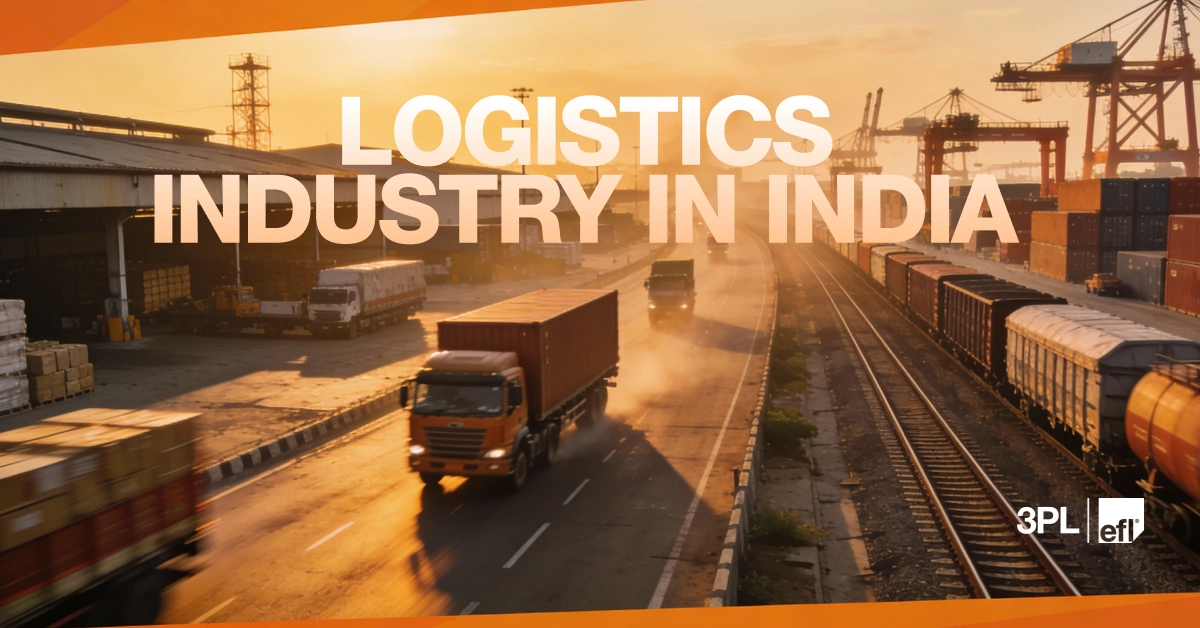
The logistics industry in India has emerged as a critical enabler of the country’s economic growth and transformation. As India pursues its ambitious goal of becoming a USD 5 trillion economy, the logistics sector is evolving from a fragmented, traditional system into an integrated, technology-driven ecosystem that supports domestic commerce and international trade.
The logistics industry in India encompasses transportation, warehousing, distribution, and supply chain management services that facilitate the movement of goods across the nation’s diverse geography. From bustling metropolitan ports to industrial corridors connecting manufacturing hubs, logistics services form the backbone of India’s trade operations and economic activity.
The logistics industry in India operates through a complex, multi-layered structure involving various stakeholders from large, organized players to numerous small and medium enterprises. Road transport dominates freight movement at approximately 60%, followed by railways, coastal shipping, and air cargo. Major cities like Mumbai, Delhi, Bangalore, and Chennai serve as primary logistics hubs due to their strategic locations and robust infrastructure networks.
Current structure of the Indian logistics ecosystem: The ecosystem comprises integrated logistics providers, specialized service providers, freight forwarders, warehousing companies in India, and last-mile delivery specialists. This diversity creates both opportunities and challenges for businesses seeking efficient supply chain solutions.
Key segments within the industry: The sector includes transportation services (the largest segment), warehousing and distribution, freight forwarding, and value-added services. Express logistics represents one of the fastest-growing segments, with India’s express logistics industry valued at USD 9 billion in FY25. The cold chain segment is also experiencing rapid expansion, particularly for pharmaceuticals and agricultural commodities.
Role of MSMEs and unorganized players: A distinctive characteristic of the logistics industry in India is the significant presence of MSMEs and unorganized players. Over 90% of trucks are individually owned, creating a highly fragmented market. While this leads to inefficiencies and standardization challenges, these small operators form the backbone of India’s freight movement system and provide employment to millions.
The logistics industry in India demonstrates impressive growth, valued at USD 228.4 billion in 2024 and projected to reach USD 428.7 billion by 2033, growing at a CAGR of approximately 6.5% to 8.8%. The sector contributes 13-14% to India’s GDP and employs over 22 million people, making it a critical pillar of economic development.
Different segments are experiencing varied growth rates. E-commerce logistics is expanding at over 10% CAGR, driven by the digital commerce boom. The 3PL companies in India market are projected to grow at a CAGR exceeding 14% as businesses increasingly outsource logistics operations. Warehousing demand for Grade-A facilities is expected to reach approximately 1.2 billion square feet by 2027.
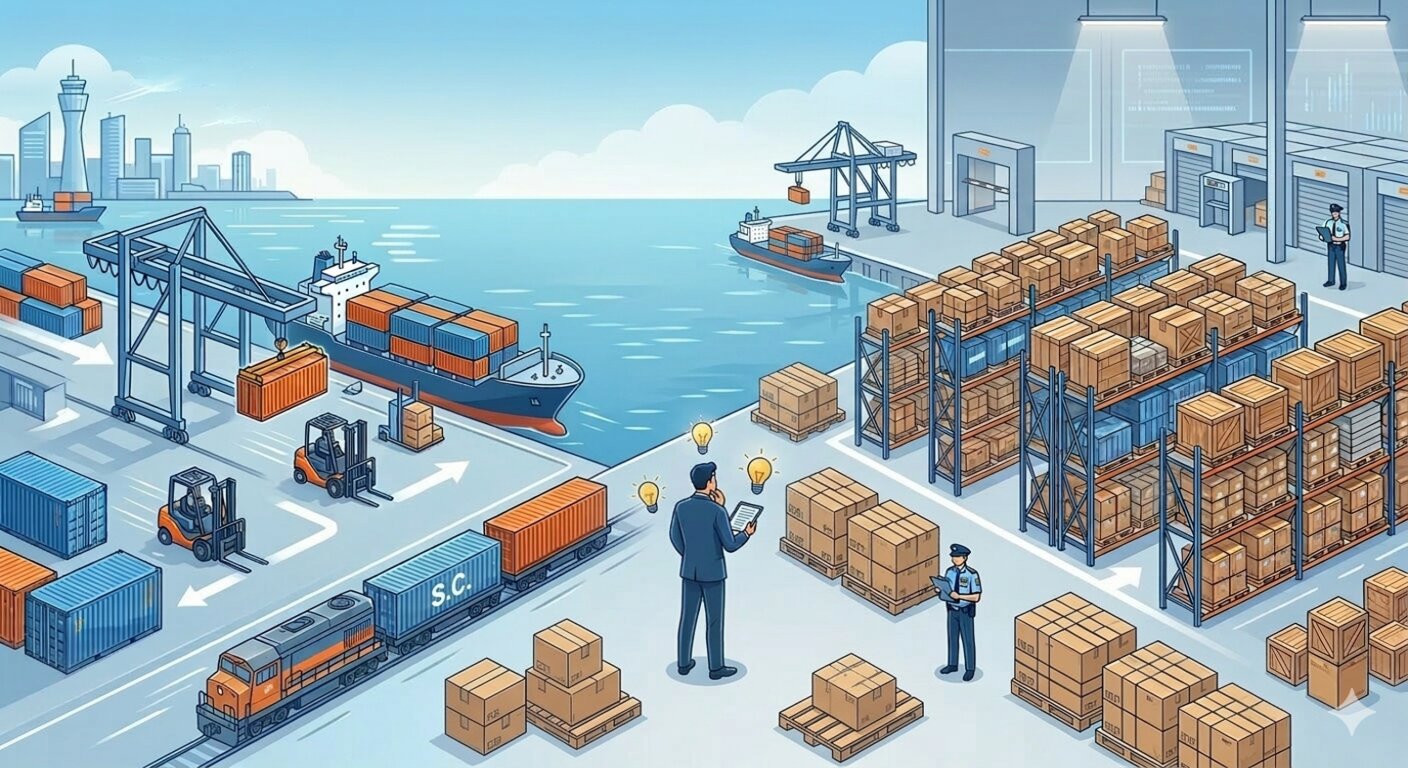
The ports, shipping, and logistics industry in India plays a crucial role in facilitating international trade, with major ports handling over 1.4 billion tons of cargo annually. The dominance of road transport, rail transport, warehousing, cold chain, logistics, and rail freight terminals reflects infrastructure development patterns across the country. As export volumes and cross-border trade continue to rise, efficient freight forwarding and customs clearance have become essential for ensuring smooth cargo movement, regulatory compliance, and predictable transit timelines.
Several convergent factors are driving robust expansion. The explosive growth of e-commerce has fundamentally transformed logistics demand, requiring faster delivery times, wider geographic reach, and sophisticated last-mile delivery capabilities. Online retail platforms have become major customers for logistics companies in India, creating entirely new service categories.
Manufacturing sector expansion under “Make in India” and Production Linked Incentive schemes has generated substantial freight movement requirements. As domestic production increases across sectors, demand for efficient supply chain networks intensifies. Rising consumer expectations for fast, reliable deliveries have pushed logistics providers to invest heavily in technology and infrastructure.
International trade growth, particularly in exports, has boosted demand for logistics services. Infrastructure improvements have reduced transit times and enhanced reliability, with the development of expressways, dedicated freight corridors, and multi-modal logistics parks improving freight movement efficiency.
Government policy interventions have played a transformative role in modernizing the logistics industry in India. Recognizing logistics as a critical enabler, the government has launched comprehensive initiatives aimed at reducing costs, improving efficiency, and enhancing global competitiveness.
Launched in September 2022, the NLP represents a comprehensive framework for creating an integrated, efficient logistics ecosystem. The policy aims to reduce logistics costs from 13-14% of GDP to approximately 8% by 2030, bringing India in line with global benchmarks. This cost reduction would significantly enhance the competitiveness of Indian businesses.
The policy focuses on seamless multimodal connectivity, promoting the Unified Logistics Interface Platform (ULIP) for data integration, establishing logistics skill development frameworks, and encouraging private sector participation in infrastructure development.
Launched in 2021, this initiative provides a digital platform for integrated infrastructure planning. Under this program, 434 projects worth Rs 11.17 lakh crore have been identified to enhance logistics efficiency across key economic corridors. PM Gati Shakti ensures coordinated development of infrastructure projects, reducing duplication and improving resource utilization.
The initiative’s focus on first-mile and last-mile connectivity is particularly significant for improving logistics efficiency in the logistics industry in India.
The implementation of GST in 2017 marked a watershed moment for the logistics industry in India. By replacing multiple state-level taxes with a unified structure, GST eliminated checkposts at state borders, significantly reducing transit times. Trucks no longer face long queues at border checkpoints, improving vehicle utilization.
The mandatory e-way bill system ensures transparency while enabling better freight tracking. FASTag adoption has transformed toll collection, enabling seamless cashless transactions that reduce waiting times and improve traffic flow.
The Bharatmala Pariyojana, a USD 130 billion highway development program, aims to create seamless freight corridors. Dedicated Freight Corridors are designed to handle high-speed freight trains, dramatically reducing transit times. The Sagarmala Programme focuses on port-led development and coastal shipping, while multi-modal logistics parks create integrated facilities for efficient cargo transfer.
An efficient logistics infrastructure delivers multifaceted benefits. Reduced operational and transportation costs emerge when roads are well-maintained and handling facilities are modern, directly improving business margins. Faster delivery timelines enable logistics companies to offer competitive service levels, meeting consumer expectations for quick fulfillment.
Improved global trade competitiveness flows from efficient logistics, making Indian exporters more competitive globally. Better supply chain visibility and reliability through modern infrastructure and technology enable just-in-time manufacturing. These improvements boost Make in India and export growth by removing major barriers to manufacturing sector expansion.
Shift Towards Integrated & 3PL Services: The logistics industry in India is witnessing a shift from fragmented providers toward integrated solutions. Businesses increasingly prefer partnering with comprehensive 3PL companies in India that manage end-to-end supply chain operations, offering scalability and flexibility.
Sustainability & Green Logistics: Environmental concerns are driving adoption of sustainable practices. Logistics companies are exploring electric vehicles for last-mile delivery, optimizing routes to reduce fuel consumption, and adopting renewable energy in warehouses. Green warehousing practices are becoming standard in modern facilities.
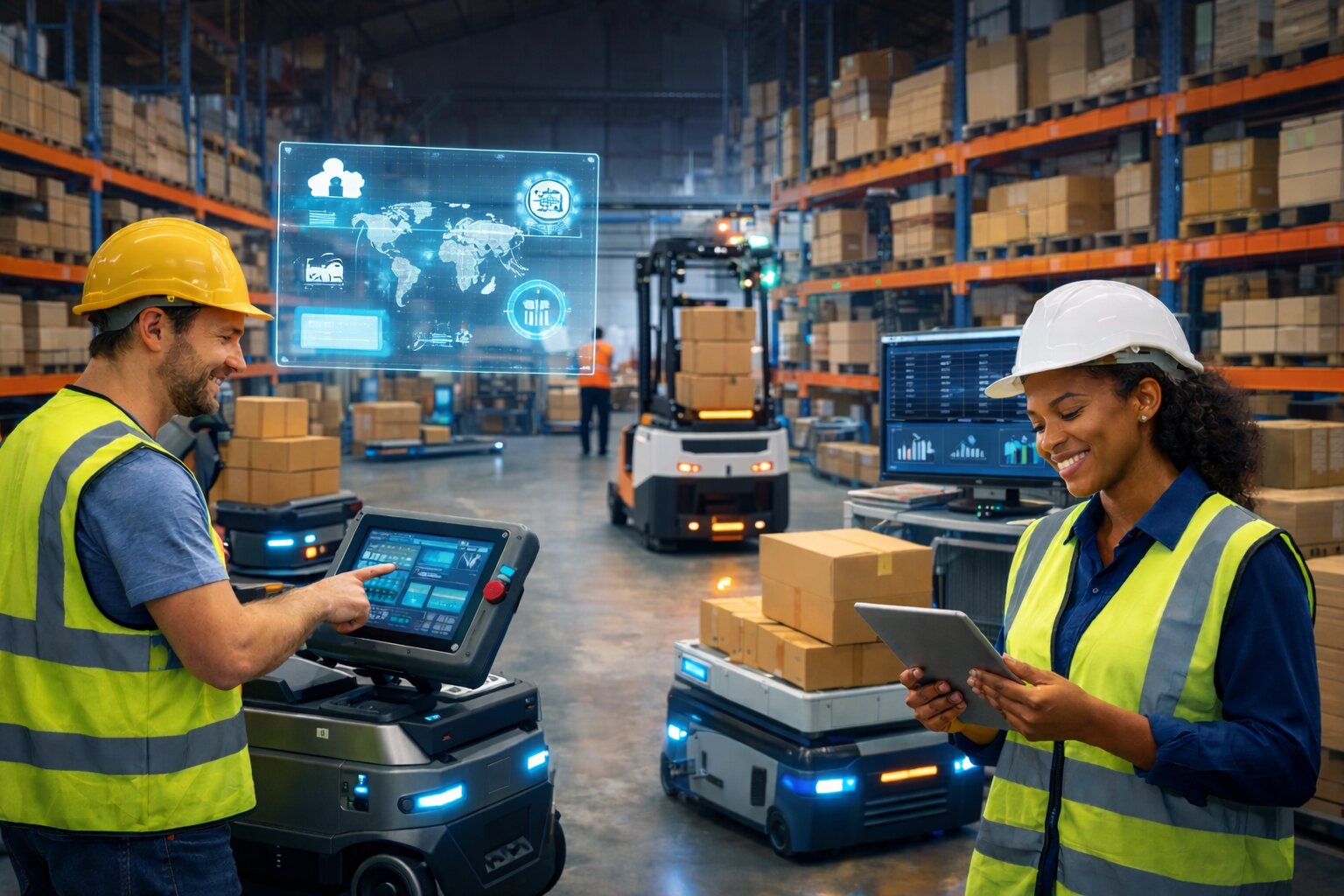
Automation & Smart Warehousing: Technology adoption is transforming operations. Smart warehouses equipped with robotic systems, AGVs, and WMS provide real-time inventory visibility. AI and machine learning enable predictive analytics for demand forecasting and route optimization, while IoT sensors track shipments in real-time.
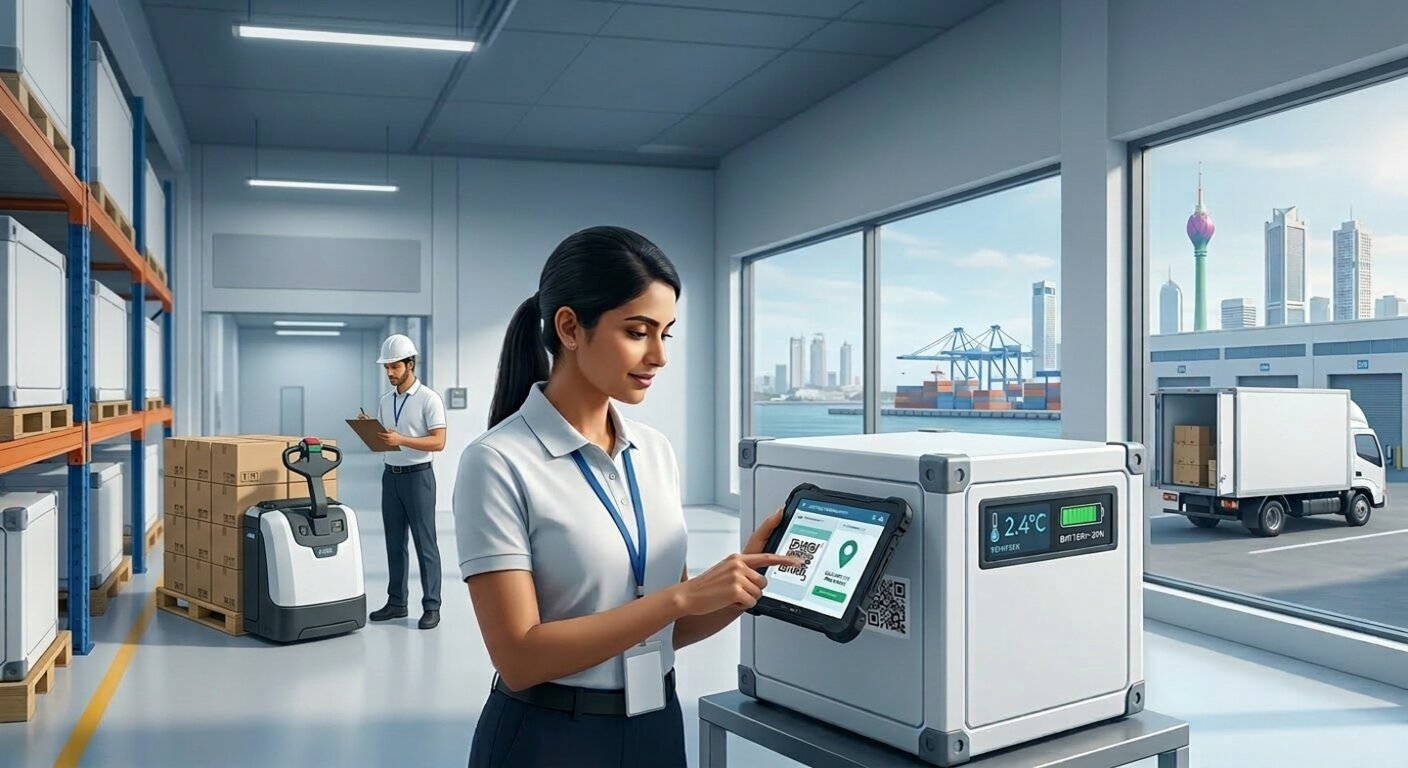
Cold Chain & Agri-Logistics Expansion: The cold chain segment is experiencing rapid expansion driven by demand for perishables, pharmaceuticals, and processed foods. Government initiatives and private investments are developing end-to-end cold chain infrastructure to reduce post-harvest losses and enable better market access for farmers.
Despite impressive growth, the logistics industry in India faces significant challenges. Infrastructure deficits remain fundamental issues, with rural roads suffering from poor quality, and port congestion causing delays. Fragmentation creates inefficiencies, with over 90% of trucks individually owned, preventing standardization and technology adoption.
Skilled workforce shortages constrain growth, particularly for specialized roles and trained drivers. Regulatory complexity, despite improvements, continues to burden operations with multiple agencies governing different aspects. High logistics costs at 13-14% of GDP exceed global benchmarks significantly. Technology adoption gaps, particularly among smaller players, limit potential efficiency gains.
The logistics industry in India features established multinationals, large domestic players, and innovative startups. Blue Dart Express, India’s pioneer in express logistics and part of DHL Group, covers 36,669+ locations and handles approximately 8% of India’s e-commerce shipments. Delhivery has emerged as a leading comprehensive provider since 2011, serving major e-commerce platforms and over 100,000 businesses.
DHL Express India and FedEx India provide premium international services, connecting Indian businesses to global markets. Gati Limited (AllCargo Gati) has been a pioneer since 1989, with coverage across 99.36% of India. DTDC Express operates one of India’s largest networks through its innovative channel partner model. Mahindra Logistics offers comprehensive 3PL services with strong automotive and consumer goods expertise, while XpressBees specializes in e-commerce logistics.
Together, these diverse logistics companies in India create a competitive ecosystem driving sector transformation.
The logistics industry in India stands at an inflection point, poised for transformative growth. With a market projected to exceed USD 400 billion by 2033 and serving as the backbone for a $5 trillion economy, the sector’s importance is undeniable. Government initiatives, including the National Logistics Policy, PM Gati Shakti, and infrastructure programs, are addressing historical constraints.
The shift toward integrated 3PL services, automation, sustainability, and specialized capabilities like cold chain logistics represents the future direction. While challenges remain-infrastructure gaps, fragmentation, workforce shortages-the momentum for change is building. For businesses operating in India, understanding the logistics industry in India is essential, as the right logistics partners provide competitive advantages through faster delivery, lower costs, and superior reliability.
The logistics industry in India is valued at approximately USD 228.4 billion in 2024 and projected to reach USD 428.7 billion by 2033. The sector contributes 13-14% to India’s GDP and employs over 22 million people, growing at 6.5% to 8.8% CAGR.
There’s no single “biggest” as companies lead in different segments. Blue Dart Express (part of DHL) is the largest express provider covering 36,669+ locations. Delhivery is among the largest comprehensive 3PL providers. Other major players include DHL Express India, Gati Limited, Mahindra Logistics, and DTDC Express.
The main types include: Inbound Logistics (incoming materials), Outbound Logistics (product distribution), Reverse Logistics (returns and recycling), Third-Party Logistics (3PL outsourced services), Warehousing Logistics (storage and fulfillment), Transportation Logistics (freight movement), Distribution Logistics (last-mile delivery), and Production Logistics (manufacturing flow coordination).
Leading companies include Blue Dart Express, Delhivery, DHL Express India, FedEx India, Gati Limited (AllCargo Gati), DTDC Express, Mahindra Logistics, XpressBees, Safexpress, and Ecom Express. Rankings vary based on criteria such as revenue, network size, or service specialization.
The logistics market size in India stood at USD 228.4 billion in 2024 and is projected to expand to between USD 357.3 billion and USD 484.43 billion by 2029-2030, representing a CAGR of 6.5% to 8.8%. The sector encompasses transportation, warehousing, freight forwarding, express logistics, and cold chain services.